
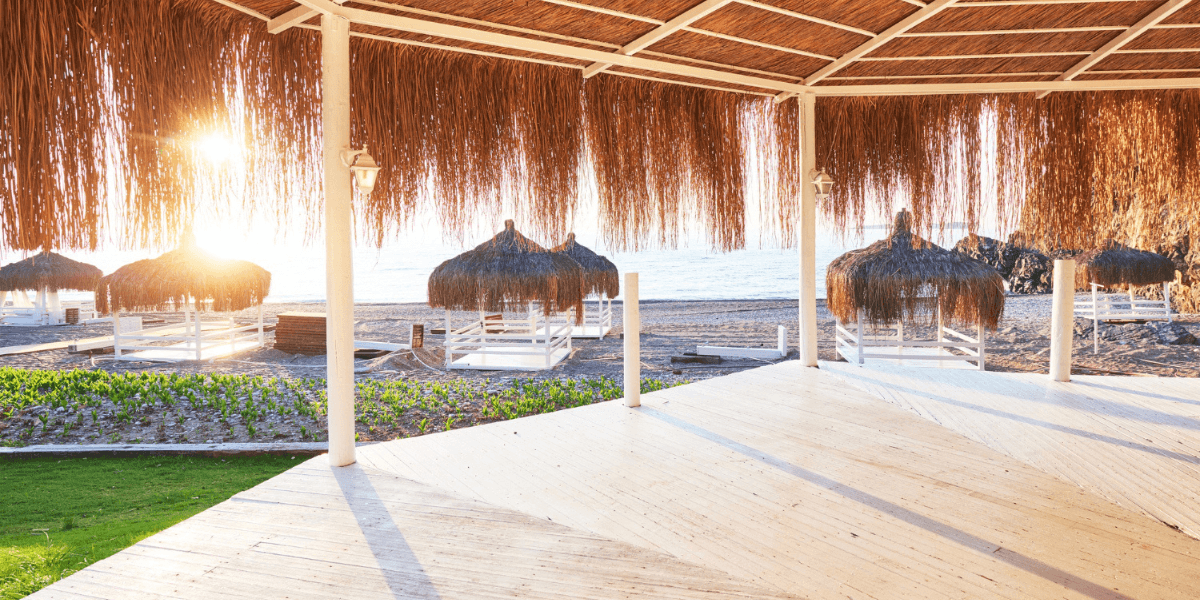
Every backyard has room for one more upgrade, and a shade structure is usually the addition people use most often. A Tiki Hut or Pergola can turn a plain patio into a spot people actually want to sit in, though each one does that job in its own way. A tiki hut wraps a space in deep, tropical shade, while a pergola lets light spill through an open wood frame overhead. Style, climate, and how much upkeep you want to handle all shape which structure fits your yard best.
This guide covers the real differences so you can pick the one that matches your space, your budget, and your everyday plans.
What Is a Tiki Hut?
A tiki hut is an open-air structure built with a wood frame and a natural thatched roof, designed to bring a tropical escape into an everyday backyard. The roof is what makes it stand out, since thick, woven palm fronds block sunlight completely and leave no gaps or partial shade underneath. This makes a tiki hut a strong choice for hot, sunny climates where full coverage matters most throughout the day.
Many homeowners also love the tropical look, since it brings a genuine resort feel right into an ordinary backyard setting. The frame itself is typically built from solid wood posts that support the weight of the thatch roof above. Beyond looks, the structure holds up well in coastal climates when it is built and maintained correctly over time.
What Is a Pergola?
A pergola is a four-post structure with an open, slatted roof, usually built from wood, aluminum, or vinyl, and designed to add definition without blocking the sky entirely. The open beams are what make it stand out, since light passes through the slats above and creates a dappled shade pattern instead of full coverage underneath. This makes a pergola a good choice for homeowners who want a brighter, airier feel outdoors.
Many people also love pairing a pergola with climbing plants or string lights for a custom, personal touch that changes with the seasons. The frame materials each bring their own character, from the warmth of natural wood to the low-maintenance finish of aluminum or vinyl. Over time, a well-built pergola becomes a flexible backdrop for whatever look a homeowner wants to create outdoors.
Pergola vs Tiki Hut: Key Differences
Shade, style, and structure are the three areas where these two options differ the most.
Shade Coverage
A tiki hut roof is woven tight enough to block nearly all direct sun, keeping the space beneath it cool even in the middle of a hot afternoon. A pergola roof lets light through unless you add a cover, like fabric or polycarbonate panels, since the open slats are part of its design.
If full shade matters most to you when weighing Tiki Hut or Pergola as your next backyard build, the tiki hut has a clear edge here, especially in climates with intense sun for most of the year.
Visual Style
A tiki hut brings a tropical, resort-style look that stands out in warm coastal areas and instantly changes the feel of a backyard. A pergola brings clean lines and a more neutral look that blends into many yard styles, from modern to traditional.
Both can be dressed up with lighting, furniture, and landscaping around the base to match a homeowner’s personal taste.
Structural Design
A tiki hut frame is built around solid posts with a peaked or domed thatched roof on top, giving it a sturdy, tropical silhouette. A pergola frame is built with beams and crossbeams that form an open grid overhead, creating a lighter, more architectural feel.
Each design holds up well when built correctly, but they look and function in very different ways depending on what a homeowner wants from the space.
Pergola and Tiki Hut: Outdoor Structure Comparison
This Outdoor Structure Comparison puts everything side by side so you can compare at a glance.
| Feature | Tiki Hut | Pergola |
| Shade Coverage | Full, solid shade | Partial, filtered light |
| Style | Tropical, resort feel | Clean, modern look |
| Roof Material | Natural or synthetic thatch | Wood, aluminum, or vinyl |
| Maintenance | Rethatching every 3 to 6 years | Regular sealing or repainting |
| Typical Frame Life | 15 to 20 years | 15 to 20 years |
A tiki hut brings full shade and a tropical feel that most pergolas cannot match on their own. Miami Tiki Huts is a trusted name for homeowners across Florida. Our craftsmen design custom tiki huts in Miami that blend durability with authentic island style. Reach out today for a free consultation!
Maintenance and Long-Term Costs
Upkeep is where these two structures really start to differ, and it’s often the deciding factor for homeowners weighing long-term cost. A tiki hut needs a rethatch every few years to stay watertight and looking its best, since natural thatch typically lasts three to six years depending on sun, wind, and salt exposure near the coast. Synthetic thatch can stretch closer to twenty years, though it costs more upfront. Annual sealant treatments also help protect the fronds from mildew and pests, so the roof holds up for as long as possible.
A pergola asks for a different kind of attention depending on the material chosen for the frame and roof. Wood pergolas need sealing or staining every couple of years to fight off rot and sun damage in a humid climate, while metal and vinyl versions need far less upkeep and hold up well with just an occasional clean. Either material can last for many years when the initial build quality is solid from the start. Choosing the right material upfront often saves on maintenance costs down the road.
Tiki Hut vs Pergola for Backyard Use
The right structure usually depends on how you plan to use your outdoor space day to day.
Best for Full Sun Yards
Yards with little natural shade benefit most from a tiki hut roof. The solid thatch blocks the harsh afternoon sun completely. This makes outdoor seating usable for more hours of the day.
Best for Garden-Style Yards
Yards with a garden theme usually suit a pergola better. Climbing plants and string lights pair naturally with an open beam structure. The filtered light also keeps nearby plants healthier underneath.
Best for Poolside Areas
Pool decks benefit from the solid coverage a tiki hut provides. Guests can relax poolside without direct sun beating down all afternoon. The tropical look also complements most pool designs nicely.
Best for Entertaining Spaces
Outdoor kitchens and bars often pair well with a tiki hut roof overhead. Full shade keeps guests comfortable during long gatherings. The structure also adds a fun, resort-style backdrop for parties.
Best for Modern Home Styles
Homes with a clean, contemporary look often suit a pergola’s simple lines. The open frame complements modern landscaping and furniture. It creates a subtle shade structure without overpowering the space.
Frequently Asked Questions
It depends on what you want most from your outdoor space. A tiki hut wins on full shade and tropical style, while a pergola wins on a lighter, more open look. Neither structure is better across the board, since the right pick depends on your climate and taste.
Think about how much shade you want and the look you are going for. A tiki hut suits hot climates and full coverage needs, while a pergola suits a brighter, more open feel. Your budget and maintenance preferences also play a role in the decision.
Yes, for homeowners who want full shade and a lasting outdoor feature. A well-built frame lasts 15 to 20 years, and the roof can be refreshed as needed over time. Many owners see it as a long-term addition that boosts both comfort and curb appeal.
A tiki hut offers complete shade coverage that a standard pergola cannot match. It also brings a distinct tropical style that stands out in warm, coastal settings. On top of that, a well-built thatch roof can provide effective protection from sun and rain when properly designed and maintained.
Final Thoughts
Choosing between these two backyard favorites often comes down to personal taste as much as practicality. A tiki hut suits homeowners who want full shade, a tropical look, and a true sense of escape right at home. A pergola suits homeowners who want a lighter, more open structure that blends into a modern or garden-style yard. In the end, the best choice depends on your climate, your goals, and the atmosphere you want to create. An outdoor structure comparison like this can help you decide which option is the better fit for your lifestyle and outdoor space. If a tropical, full-shade escape is calling your name, Miami Tiki Huts has spent years mastering the craft of tropical outdoor builds. We bring that experience to every tiki hut installation in Miami, big or small. Visit us for a build that captures that resort feeling at home!