
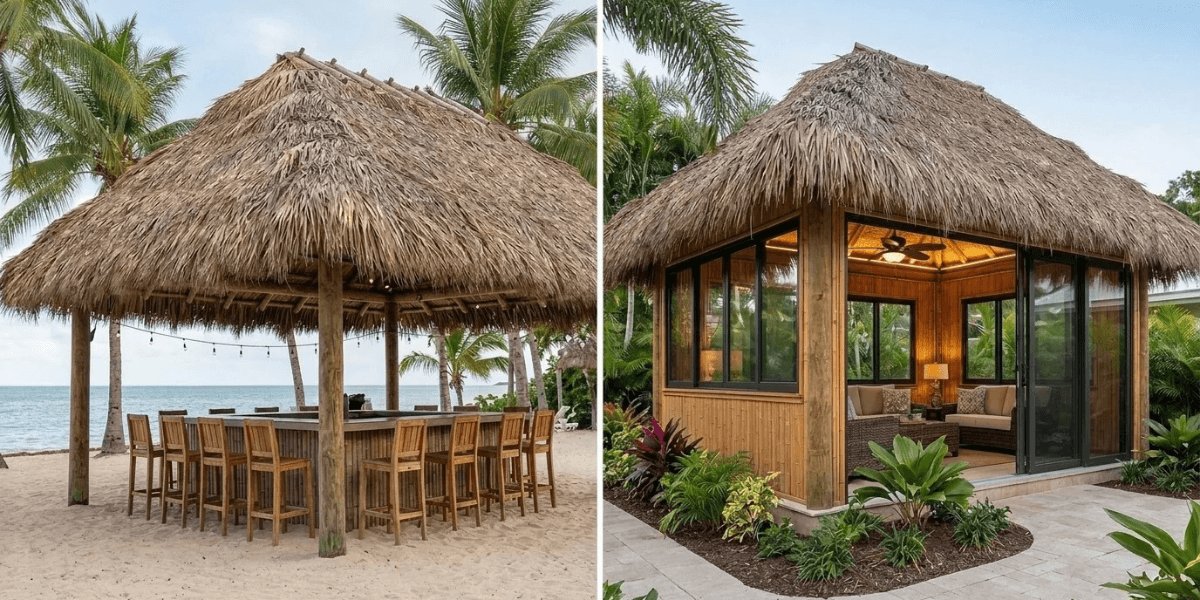
Choosing between a hut with open sides and one with walls shapes how you will use the space for many years. In South Florida, sun, heavy summer rain, insects, and strong wind all factor into that choice. A relaxed poolside spot has different needs than a covered dining area that guests use after the sun goes down. Below, you will see how each style performs in different weather conditions and meets your comfort needs, along with a simple side-by-side table and short answers to the most common questions. By the end, you will know which features matter most for your property and which questions to ask your builder before any work ever begins.
How Does an Open vs Enclosed Tiki Hut Compare?
An open-air hut has a roof and posts with open sides, allowing breezes to pass through and keeping outdoor views unobstructed. An enclosed hut adds walls, screens, or windows around the same kind of roof, which creates a more sheltered room. The table below shows the main differences at a glance.
What Are the Open-Air Tiki Hut Advantages?
Open-air designs remain the most recognized tiki hut style for good reason. Here is what they do best.
● Natural Airflow and Open Views
Open sides let a breeze pass through the structure, which helps the space feel lighter during hot months. Nothing blocks the view of a pool, garden, or waterfront, so the hut blends in with the surrounding yard.
● Traditional Tropical Character
The open-sided wooden hut with a thatched palm roof is the traditional form of a tiki hut. Guests notice that look right away, and it suits relaxed gatherings around a pool or patio. A simple frame keeps the thatch as the focal point.
● A Possible Exemption Path
Miami-Dade County recognizes a specific building-code exemption for qualifying chickees constructed by members of the Miccosukee Tribe or Seminole Tribe of Florida. Florida law defines a chickee as an open-sided wooden hut with a thatched roof made from palm, palmetto, or other traditional materials. It may include a wooden deck and certain non-wood fasteners.
What Are the Enclosed Tiki Hut Benefits?
Adding walls or screens trades some openness for comfort and control. These benefits matter most in South Florida.
● Better Protection From Insects
Screens and walls help keep mosquitoes out, and the CDC recommends screens on windows and doors for that purpose. The CDC also confirms that mosquitoes can bite during both daytime and nighttime hours, so protection matters well beyond sunset. A screened or walled hut lets guests stay comfortable at dusk.
● Added Sun Protection From the Sides
UV rays also reach you by bouncing off water, concrete, and other surfaces. The Skin Cancer Foundation says shade structures with side protection offer better protection than structures without walls or side draping. A solid roof also provides steadier overhead shade than leafy branches. Even so, no structure replaces sunscreen, clothing, and a hat.
What Are the Disadvantages of Open-Air and Enclosed Tiki Huts?
Although both styles offer practical benefits, each has limitations worth considering before you choose a design. Understanding these drawbacks helps you select a tiki hut that suits your property, budget, and intended use.
Open-Air Tiki Hut Disadvantages
- Limited weather protection: Wind-driven rain can reach seating and furniture.
- More insect exposure: Mosquitoes and other insects can enter freely.
- Less privacy: Open sides leave the seating area exposed to surrounding views.
- Seasonal limitations: Heavy rain, strong winds, and intense sun can reduce comfort.
Enclosed Tiki Hut Disadvantages
- Reduced airflow: Walls restrict natural breezes and can trap heat.
- Higher installation costs: Additional walls, screens, and windows increase material and labor costs.
- Less traditional appearance: Enclosed designs lose some of the classic open-air tropical character.
- More maintenance: Windows, doors, and screens need regular cleaning and repairs.
- Different permit requirements: Enclosed structures may not qualify for open-sided chickee exemptions.
Consider these drawbacks alongside your budget, property layout, and intended use before deciding.
Open-Air vs Enclosed Tiki Hut Performance in Florida Weather
Neither style wins in every season, so weather should guide your choice. The points below compare how each style handles the main conditions.
● Rainy Season Rainfall
South Florida’s wet season runs from May 15 to October 15 and brings between 60 and 70 percent of the average yearly rainfall. A roof covers the seating area, but open sides leave it exposed to blowing rain. Enclosed walls block most of that spray, making outdoor use more comfortable during the wet season.
● Wind and Storm Season
The National Weather Service lists damaging thunderstorm winds and lightning among wet-season hazards, and tropical systems matter most in August, September, and October. Neither style replaces a proper shelter, so move indoors when storms approach. Sturdy construction and secure connections deserve close attention in either design.
● Heat and Airflow
Heat is a chronic hazard in South Florida, and the National Weather Service reports the heat index can frequently reach or exceed 100 degrees Fahrenheit in July and August. Open sides let natural airflow help in that heat. An enclosed hut limits that breeze, so plan for fans, vents, or cooling.
● Materials Matter in Either Style
Both styles depend on the same basic materials. Pressure-treated timber is the preferred frame material, and the thatched roof needs periodic replacement. Pressure-treated timber lasts roughly 15 to 20 years, while cypress can rot in as little as 2 to 3 years. A sable palm thatch roof typically lasts 5 to 6 years before a rethatch, depending on sun exposure, wind, and roof pitch.
Which Style Fits Your Property?
Your daily use matters more than any single feature. Open-air fits best when you want a breeze and open views, and you plan to use the space mostly for relaxed gatherings in warm weather. It also suits owners who prefer the traditional look of a thatched hut with open sides.
Enclosed fits best when you want fewer insects, added side protection from the sun, and easier use during rainy weather. Businesses that host guests through the wet season may also prefer walls for comfort.
Your property deserves more than a one-size-fits-all design. Choose the style, define how you want to use the space, and let Miami Tiki Huts handle the creative possibilities. Explore custom tiki hut construction in Miami, tailored to your property!
Frequently Asked Questions
1. What Is the Difference Between an Open-Air and an Enclosed Tiki Hut?
An open-air tiki hut has a thatched roof and open sides, so air and views pass through freely. An enclosed tiki hut adds walls, screens, or windows around the roof, which gives more protection from rain, insects, and wind. The main trade-off is breeze and openness versus shelter and control.
2. Are Open-Air or Enclosed Tiki Huts Better for Florida Weather?
Enclosed designs can reduce exposure to wind-driven rain and strong breezes, making the seating area more comfortable during ordinary wet weather. However, walls do not automatically make a structure storm-resistant. Proper structural design, secure connections, and suitable materials remain essential in South Florida.
3. Are Enclosed Tiki Huts Better Than Open-Air Tiki Huts in Miami?
Enclosed huts are better for wet-season use, insect control, and added side protection from the sun. Open-air huts are better for breezes, open views, and the traditional look. The better choice depends on how you use the space, so match the style to your daily habits.
4. Do Open-Air Tiki Huts Provide Enough Shade From the Florida Sun?
A solid roof provides steady overhead shade, but open sides still let scattered and reflected UV reach you. The Skin Cancer Foundation notes that no shade structure fully blocks indirect UV, so sunscreen, protective clothing, and a hat remain important. A larger roof or added side protection can improve comfort.
5. Does Adding Walls Change the Permit Rules for a Tiki Hut?
Miami-Dade County exempts only open-sided chickees built under specific conditions, so a hut with walls no longer qualifies. Ask your local building office to review the plan before you start construction.
Final Thoughts
Open-air huts reward you with breeze, views, and traditional character, while enclosed huts reward you with protection from rain, insects, and side sun. Think about how often you use the space, which season matters most, and how comfortable you are with weather exposure. Check local permit rules early, since walls change how a structure is classified. With a clear plan, either style can become one of the most-used spaces on your property. Now that you know what each style brings to the table, it’s time to picture how it could transform your property. Let Miami Tiki Huts help you create an outdoor area that fits your needs, enhances your surroundings, and welcomes every gathering. Get a free estimate for expert tiki hut installation in Miami!