
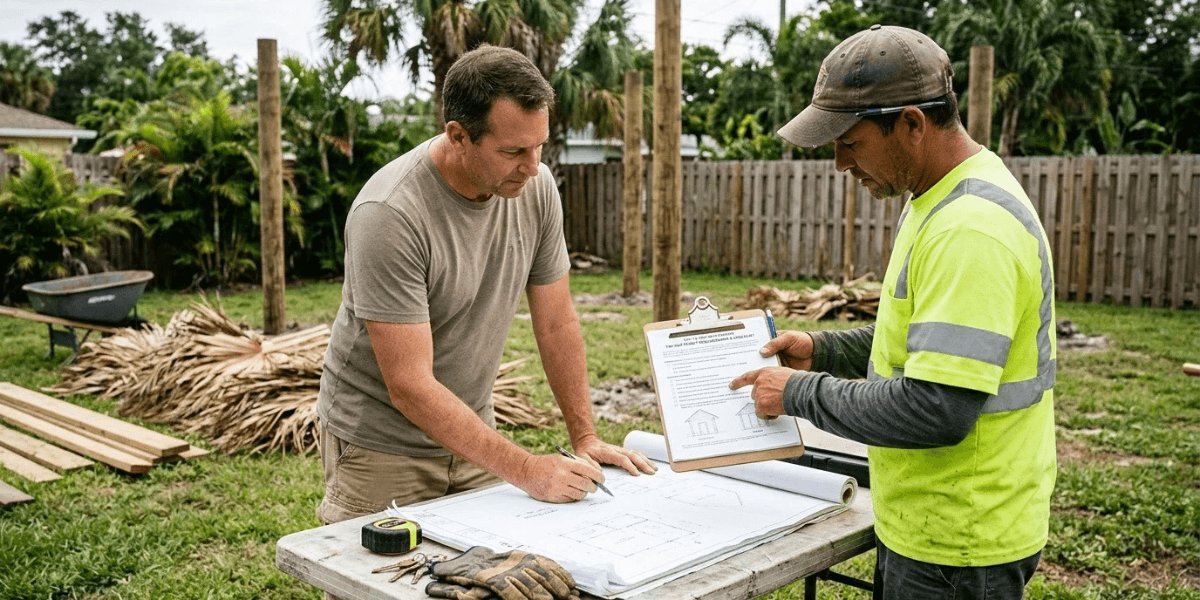
A thatched shade structure may look simple, but obtaining the necessary approvals can involve several steps. In Miami-Dade County, the answer often depends on your exact address, the materials you choose, and exactly who builds the structure. Checking the requirements before construction begins can save you weeks of delay, frustration, and the cost of redoing work. Below, you will see how local offices divide responsibility, which exemptions exist, and which steps can help you understand the applicable requirements. You will also find a checklist to bring to your first consultation, plus short answers to the questions homeowners ask most often.
What Are the Tiki Hut Permit Requirements in Miami?
Miami’s rules come from several layers. The Florida Building Code sets the structural baseline, a county or city office issues and inspects permits, and local zoning decides where a structure can sit on your lot. Each layer can add its own conditions, so one general answer rarely fits every property.
Your property’s location decides which office reviews the project. Miami-Dade County’s Regulatory and Economic Resources Department handles unincorporated areas, while cities such as the City of Miami run their own building departments. The table below shows where to begin.
Do You Need a Permit for a Tiki Hut in Miami-Dade County?
The safest answer is yes until the right office tells you otherwise. The county does exempt chickees from the Florida Building Code, but only under tight conditions. A new small-project exemption, effective July 1, 2026, has specific eligibility requirements.
● What Counts as a Chickee
A chickee is an open-sided wooden hut with a thatched roof made from palm, palmetto, or other traditional materials. It may include a wooden deck and certain non-wood fasteners, such as nails and hurricane straps. Florida law also allows electrical or plumbing features when installed under the appropriate building permit.
● Who Can Build a Chickee
An enrolled member of the Miccosukee Tribe of Indians or the Seminole Tribe of Florida must build it. That builder must show a tribal card and hold a chickee license from Miami-Dade County, or serve as a corporate officer of a general contractor. Even then, the structure needs a Zoning Improvement Permit to comply with the zoning code.
● What Applies to Other Tiki Huts
Treat any other tiki hut as a permit project until the county or your city confirms otherwise. The chickee exemption does not cover huts that fall outside the definition above, so ask the permitting office to review your plan.
● How the Small-Project Exemption Works
Florida introduced a small-project permit exemption effective July 1, 2026, for qualifying work valued under $7,500 at single-family homes. However, it excludes structural, electrical, plumbing, mechanical, and gas work, as well as properties located partially or entirely within a flood hazard area. Homeowners must also submit a written exemption request with supporting documentation.
How Do You Check Tiki Hut Building Requirements Step by Step?
A few short steps will show you which rules apply to your lot. Work through them in order, because each answer shapes the next one.
1. Confirm Your Jurisdiction
Start with your address. Find out if it sits in unincorporated Miami-Dade or inside a city or town, since that decides which building department answers your questions. If you cannot tell, call the county’s Permitting and Inspection Center at 786-315-2000 and ask.
2. Look Up Your Zoning District
Zoning controls where a structure may sit on your lot. The county’s interactive land management map lets you find your zoning district by address or folio number. The county also advises you to follow your homeowner association guidelines and zoning district rules before starting any work.
3. Ask for Written Confirmation
Once you reach the right office, describe your plan and ask the reviewer to confirm the answer in writing. A written reply gives you something to share with your builder if questions come up later. The county’s MeetQ service lets you register and consult with staff. Share the planned size, height, and materials.
A Tiki Hut Permit Checklist You Can Use Before Construction
Bring this checklist to your first consultation. If your project needs a Zoning Improvement Permit, the county asks for a completed application, a contact sheet, scaled drawings, and a current land survey showing the planned location. Drawings do not need an architect’s or engineer’s certification, but they must be drawn to scale.
- Confirm if your address is unincorporated or inside a city.
- Look up your zoning district and read your homeowner association rules.
- Check your flood zone through FEMA’s Flood Map Service Center, since flood hazard areas do not qualify for the small-project exemption.
- Decide if the structure includes electrical, plumbing, or other non-wood features.
- Prepare scaled drawings and a current land survey.
- Confirm that your builder holds a county or state license in a category that can obtain the permit.
The county may reject incomplete or illegible applications, so review every page before you submit. Miami Tiki Huts guides every client through the permit requirements for their specific area, so you can move forward with confidence!
What Happens If You Build Without Checking First?
Skipping the permit check can lead to code enforcement action, additional costs, and delays. Miami-Dade County requires permits for applicable construction work, and each municipality has its own building official. If you begin work without the required approvals, you may have to resolve the violation before moving forward.
Confirm the requirements with your local building department before construction. Zoning approval and a building permit are separate questions. A structure can be exempt from the Florida Building Code and still need zoning review, which is how the chickee exemption works in the county. Asking first usually takes a short call or consultation.
Frequently Asked Questions
1. How do I check tiki hut permit requirements in Miami, Florida?
Start by finding out which office covers your address, then ask that office what applies to a thatched structure on your lot. Review the exemption list, check your zoning district and flood zone, and request written confirmation before you begin construction.
2. Where can I check tiki hut building requirements in Miami-Dade County?
For unincorporated areas, start with the Miami-Dade Regulatory and Economic Resources Department, which publishes its permit exemptions and Zoning Improvement Permit details online. You can also book a consultation through its MeetQ service.
3. Which department handles tiki hut permits in Miami?
Inside the City of Miami, the Building Department handles building permits and enforces state and county codes within city limits. Zoning questions go through the city’s zoning and planning teams. Properties in unincorporated Miami-Dade fall under the county’s Regulatory and Economic Resources department.
4. How can I check whether my property needs a tiki hut building permit?
Compare your plan with the county’s exemption list. A tiki hut built by a qualifying tribal member has a narrow exemption but still needs zoning review. A structure with electrical, plumbing, or other non-wood features falls outside it, so ask the permitting office to review any plan that does not clearly match an exemption.
5. Can I split a tiki hut project into smaller jobs to avoid a permit?
No, the county states that you can’t divide a project into smaller phases to avoid permitting rules. Describe the full structure when you contact the office so the review covers everything you plan to build.
Final Thoughts
Checking the rules before construction takes a little time, but it protects your budget and your schedule. Find out which office covers your address, confirm your zoning and flood status, and ask for written answers about exemptions. Chickee exemptions are narrow, and structures with lighting or a bar need closer review. If you are unsure, ask early, because a clear answer now keeps your project moving later. A little planning today can make your outdoor transformation much easier tomorrow. Ready to create a space where Florida living feels even better? Contact Miami Tiki Huts for a free estimate on construction and installation of tiki hut in Florida!